

When building a villa in Dubai or renovating an apartment in Sharjah, one of the most critical decisions happens behind the walls: selecting the right Piping System.
Walk into any hardware store, and you will see rows of white and grey plastic pipes. They look identical, but making the wrong choice in the PVC vs UPVC decision can lead to leaks and costly repairs. This leads to the most common question we get at Junaid World regarding PVC vs UPVC specifications.
In this guide, we break down the PVC vs UPVC debate, helping you understand which material is best for your drainage, featuring trusted brands like Hepworth and Cosmoplast. By the end, the PVC vs UPVC choice will be clear for your project.
 The Basics: What Do the Names Mean?
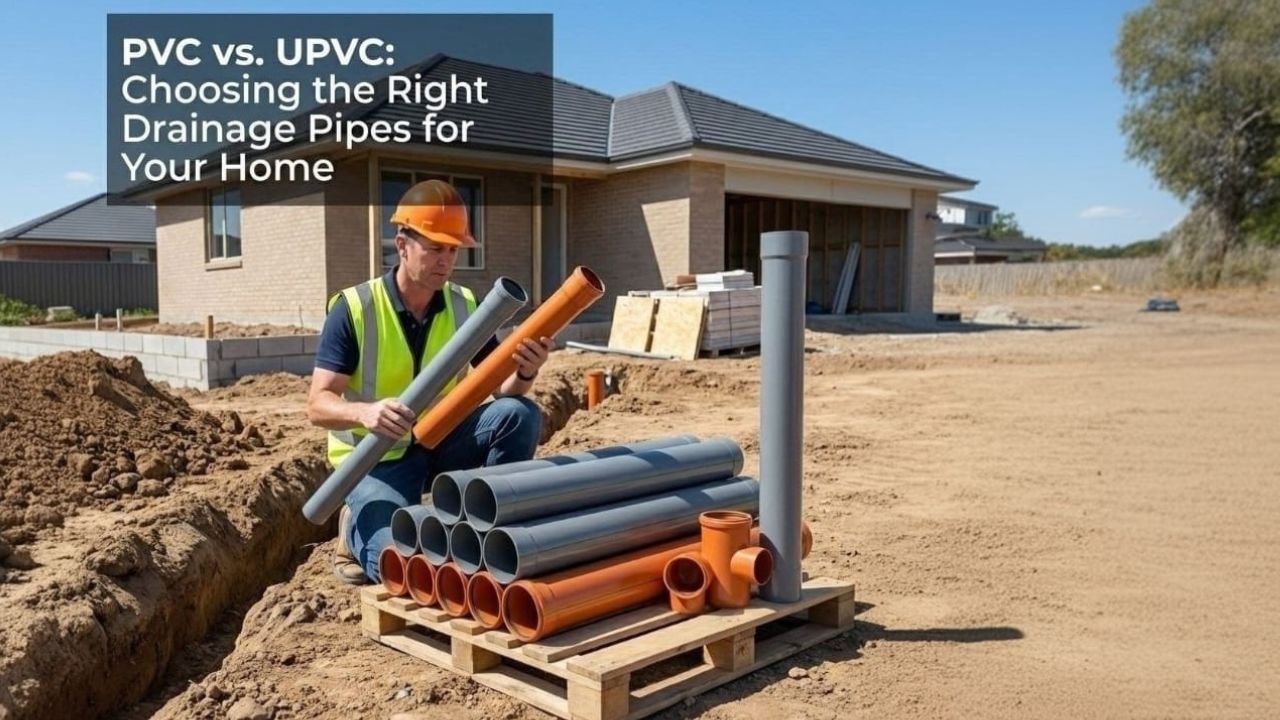 The Basics: What Do the Names Mean?
To understand the difference, we must look at the chemistry.
PVC (Polyvinyl Chloride):
This is the standard polymer. In its raw form, PVC is actually quite rigid. However, to make it flexible for hoses (like garden hoses) or tubing, manufacturers add “plasticizers.”
UPVC (Unplasticized Polyvinyl Chloride):
As the name suggests, UPVC is PVC without the plasticizers. This makes the pipe rigid, hard, and incredibly durable. In the construction industry in the UAE, when people say “PVC pipes” for drainage, they are almost always referring to UPVC.
PVC vs. UPVC: 5 Key Differences
While they share a similar base, their applications in your home are vastly different.
1. Flexibility vs. Rigidity
PVC: Because it contains plasticizers, standard PVC is softer and more flexible. It is rarely used for main building drainage because it can sag or warp under weight.
UPVC: It is rigid and stiff. This makes it perfect for Piping Systems that need to hold their shape while transporting wastewater from your Sanitaryware to the sewer.
2. Durability and Lifespan
UPVC is the champion of durability. It is resistant to UV rays (crucial for exposed roof pipes in the UAE), oxidation, and varying weather conditions. Brands like Hepworth and Cosmoplast manufacture UPVC pipes designed to last 50+ years.
3. Chemical Resistance
Drainage pipes carry more than just water; they carry soaps, detergents, and chemicals from your washing machine. UPVC has superior chemical resistance compared to flexible PVC, ensuring the pipe walls don’t corrode over time.
4. Toxicity (The Health Factor)
UPVC is often food-grade and BPA-free, which is why it is used for cold water supply lines as well as drainage.
PVC containing plasticizers can leach chemicals, making it unsuitable for potable water transport.
5. Heat Resistance
Both have limits, but UPVC handles the discharge from a hot dishwasher or washing machine better than standard flexible PVC, which might soften and deform.
Which One Do You Need?
Knowing the difference is great, but which one should you buy for your project?
Scenario A: The Kitchen Sink & Bathroom Waste
Requirement: rigid pipes to carry water from the Wash basin, Kitchen Sink, or Bathtubs.
Winner: UPVC. You need the pipe to maintain a specific gradient (slope) for water to flow. Flexible PVC would sag, creating blockages.
Scenario B: The Main Sewer Line (Underground)
Requirement: High crush resistance to withstand soil pressure.
Winner: UPVC. specifically, heavy-duty UPVC (often colored orange or grey in the UAE) from brands like Cosmoplast.
Scenario C: Garden Irrigation
Requirement: Flexibility to move around trees and corners.
Winner: PVC. Flexible hose pipes (found in our Garden Accessories section) are made of plasticized PVC.
Top Brands for UPVC Drainage in the UAE
At Junaid World, we stock the “Big Three” of the piping world. Using these brands ensures your system meets UAE municipality standards.
1. Hepworth
A market leader in the Middle East. Hepworth UPVC pipes are synonymous with quality. They offer a complete system of pipes and Fittings (elbows, tees, couplers) that fit together perfectly, preventing leaks.
2. Cosmoplast
Based locally, Cosmoplast understands the Gulf climate. Their pipes are widely used in residential villas and high-rise towers for soil and waste management.
3. RAKtherm
While famous for their PPR (hot water) pipes, RAKtherm also produces high-quality UPVC drainage systems known for their high impact strength.
Why Buy Piping Systems from Junaid World?
Sourcing pipes seems simple until you realize you are missing a specific connector or the pipe quality is poor. Here is why contractors choose us:
Complete Ecosystem: We don’t just sell pipes. We sell the Solvent Cement (glue), the Clamps, the Floor Drains, and the Manhole Covers.
Storage Matters: UPVC pipes can warp if stored incorrectly. Our warehouses keep pipes flat and protected from the sun until delivery.
Technical Advice: Not sure if you need a 110mm or 160mm pipe for your sewage outlet? Our team can guide you.
Case Study: Villa Renovation in Dubai Hills
The Problem
A homeowner in Dubai Hills noticed a foul smell and damp walls near the kitchen. Investigation revealed that the previous contractor had used low-grade plastic piping that had cracked under the weight of the soil, leading to leaks and unpleasant odors.
The Solution
The plumbing system was completely replaced using Hepworth UPVC pipes Dubai UAE, sourced from Junaid World, a trusted Raktherm UPVC pipes supplier. To ensure durability under the UAE’s extreme heat, we used high-quality solvent cement for permanent welded joints.
For additional reliability, all drainage and water supply connections were upgraded with Cosmoplast PVC pipes supplier UAE, ensuring a modern, high-performance plumbing system. Materials were procured through Raktherm distributors Dubai UAE, guaranteeing genuine, certified piping products.
The Result
The villa now boasts a leak-proof, odor-free drainage system with a life expectancy of decades. The upgrade not only resolved the dampness and smell but also added long-term value to the property.
Key outcomes include:
Durable UPVC and PVC piping capable of withstanding Dubai’s harsh climate
Seamless welded joints with solvent cement for permanent sealing
Enhanced property value with a modern, certified plumbing system
FAQ: PVC and UPVC Questions
1. Can I use UPVC pipes for hot water supply?
No. For hot water supply (pressure pipes), you should use PPR (Polypropylene) pipes from brands like RAKtherm or Ariston heaters compatibility. UPVC is best for cold water and drainage only.
2. How do I join UPVC pipes together?
UPVC pipes are usually joined using Solvent Cement. This chemical “melts” the outer layer of the pipe and the inner layer of the fitting, fusing them into a single piece.
3. Is UPVC expensive?
UPVC is very cost-effective compared to metal pipes (like copper or iron) and offers a better price-to-performance ratio than standard PVC given its longevity.
4. Can I buy UPVC pipes online in Dubai?
Yes. You can order various lengths and diameters of Hepworth and Cosmoplast pipes directly at store.junaidworld.com.
5. What is the difference between Soil and Waste pipes?
“Soil” pipes carry water from toilets (Water Closets), while “Waste” pipes carry water from sinks and showers. In the UAE, both use UPVC, but the diameters differ (usually 110mm for soil, 32-50mm for waste).
Conclusion
When it comes to PVC vs UPVC for your home’s drainage, the winner is clear. UPVC offers the rigidity required for the harsh UAE environment. Understanding the PVC vs UPVC distinction ensures you don’t compromise on the arteries of your home.
Whether you are a contractor or homeowner, knowing the PVC vs UPVC difference saves money in the long run. Choose trusted brands like Hepworth and Cosmoplast.
Visit store.junaidworld.com for all your plumbing needs.